
If you’re hungry an hour after breakfast, the problem may be what’s on your plate. A carb-heavy breakfast — toast, cereal, a pastry — spikes blood sugar and leaves you reaching for a snack by mid-morning. Protein is the most filling macronutrient, and front-loading more of it earlier in the day is one of the simplest upgrades you can make. Here’s the why, how much to aim for, and easy high-protein breakfasts you can make on a busy morning.
Why protein at breakfast helps
Protein keeps you full through real biology, not willpower. It blunts the hunger hormone ghrelin and nudges up satiety signals like GLP-1 and PYY, so you stay satisfied longer. It also slows how quickly the meal hits your bloodstream, which means steadier blood sugar and energy instead of the spike-and-crash of a sugary breakfast. And because it supplies the building blocks for muscle, a solid morning dose supports muscle maintenance — which matters more with age.
How much — and why most people get the timing backwards
A good target is 25–30 grams of protein at breakfast. There’s a reason for that number: muscle responds best to roughly 25–30 g in one sitting, the threshold that switches muscle-building on. The catch is that the typical pattern is backwards — tiny protein at breakfast, a little at lunch, and a huge load at dinner. Spreading protein more evenly across the day, starting with breakfast, helps with both fullness and muscle. Breakfast is usually the easiest meal to fix, because it’s so often the most protein-light.
Easy high-protein breakfast ideas
- Greek yogurt bowl — plain Greek yogurt with berries, nuts, and seeds (~20 g)
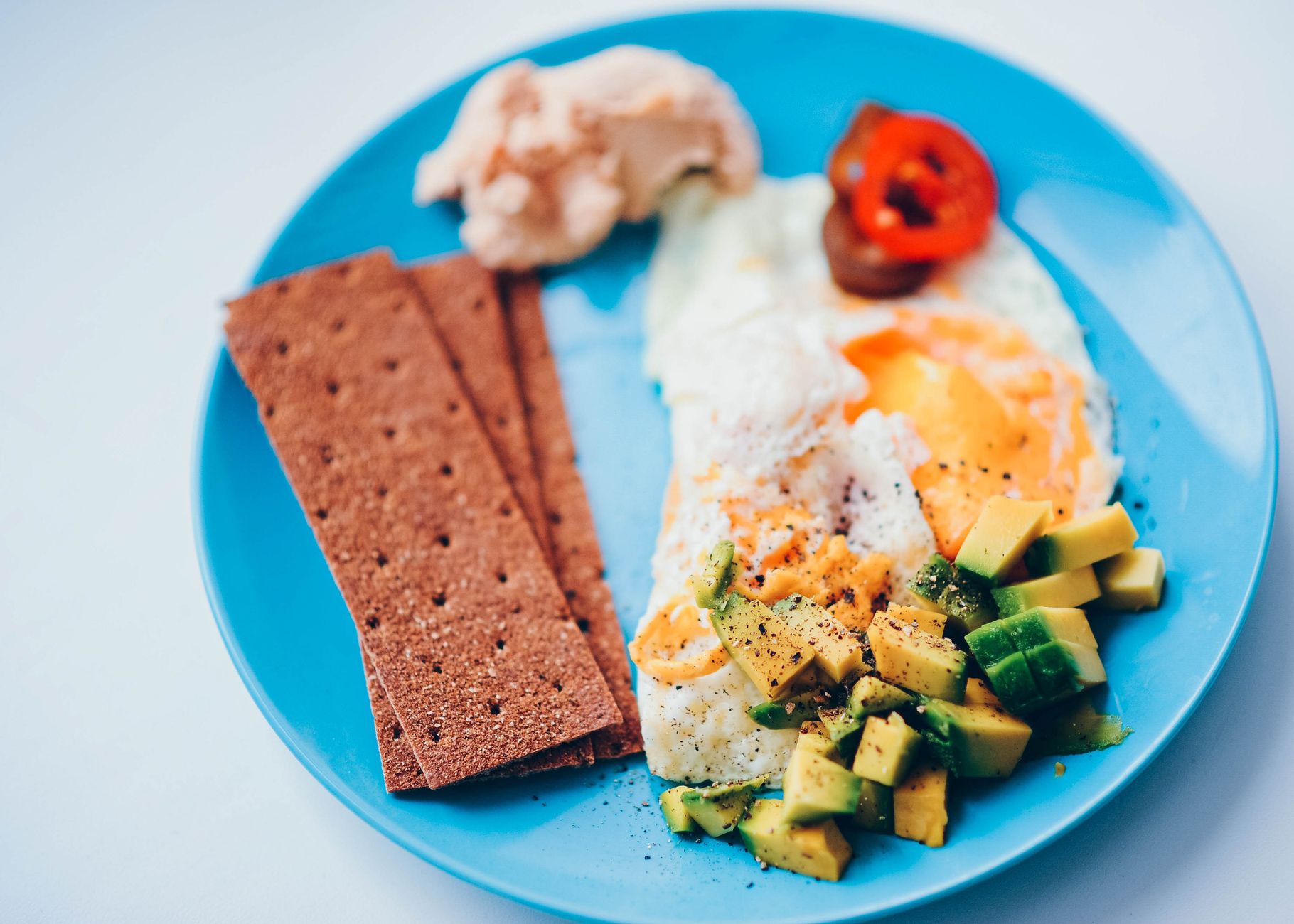
- Eggs, two or three — scrambled or boiled, with whole-grain toast and veggies
- Overnight oats with protein — oats soaked in milk or yogurt plus a scoop of protein powder; make it the night before
- Cottage cheese plate — very high in protein; pair with tomato and whole-grain crackers, or fruit
- Tofu scramble — a plant-based option: firm tofu with vegetables and turmeric
- Protein smoothie — milk or plant milk, protein powder, a banana, and spinach for grab-and-go
💡 Tip: Add a protein “anchor” to whatever you already eat — a couple of eggs, a scoop of Greek yogurt, or a handful of nuts — rather than overhauling breakfast entirely.
How to actually hit 25–30 g
Single foods often fall short, so combining is the trick:
| Food (typical serving) | Protein |
|---|---|
| Greek yogurt (170 g) | ~17 g |
| 2 large eggs | ~12 g |
| Cottage cheese (½ cup) | ~14 g |
| Protein powder (1 scoop) | ~20–25 g |
| Milk (1 cup) | ~8 g |
For example: Greek yogurt (17 g) + a tablespoon of seeds and some milk easily clears 25 g; or two eggs (12 g) plus cottage cheese (14 g) gets you there. You rarely need a powder — it’s just a convenient shortcut on rushed mornings.
Is breakfast necessary, and who benefits most?
Skipping breakfast isn’t inherently “bad” — for some people, eating in a shorter daily window works fine, and total daily protein matters more than any single meal. But if you eat breakfast, making it protein-rich is a high-value move, especially for older adults (to protect muscle), people managing weight (protein curbs later snacking), and anyone who feels a mid-morning energy crash. The point isn’t to force breakfast — it’s to make the one you eat work harder.
FAQ
Q. How much protein should breakfast have?
Aim for about 25–30 g for most adults. That range helps you stay full and is roughly the amount that best supports muscle in a single meal.
Q. Is skipping breakfast bad?
Not necessarily — it depends on the person, and total daily protein matters most. But if you do eat breakfast, making it protein-rich helps with fullness, steady energy, and muscle.
Q. Are protein powders necessary?
No. Whole foods like eggs, Greek yogurt, and cottage cheese work great and are often cheaper. Powders are simply a convenient way to top up on a busy morning.
Sources
- Harvard T.H. Chan School of Public Health — The Nutrition Source: Protein
- MedlinePlus (U.S. National Library of Medicine) — Dietary proteins
⚠️ Medical disclaimer: This article is for general information only and is not a substitute for personalized dietary advice. Consult a professional if you have specific health or dietary needs.



Leave a Reply