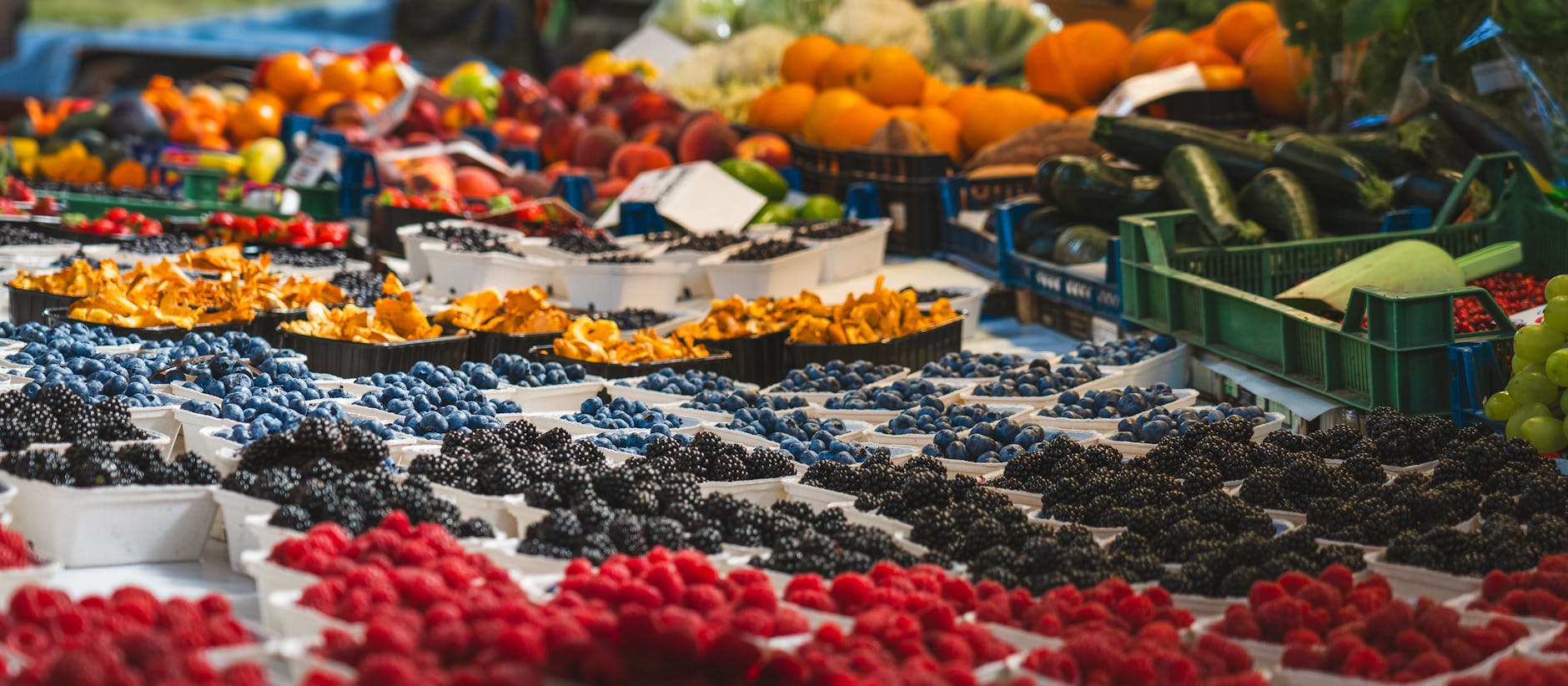
Serums and sunscreen get the attention, but your skin is also built from what you eat. No food erases wrinkles or clears breakouts overnight — yet a steady, colorful diet gives skin the raw materials and protection it needs. Here’s what the evidence actually supports, minus the miracle claims.

Does food really affect your skin?
Yes — but it’s one factor among several. Sleep, sun exposure, genetics, and your skincare routine all matter too. What you eat supplies the building blocks for collagen and the antioxidants that defend skin from daily wear.
Think of diet as the foundation, not a cure-all. It works quietly, over weeks, alongside everything else.
Antioxidants: your skin’s daily defense
Every day, sunlight and pollution create “free radicals” that wear skin down. Antioxidants help neutralize them.
- Vitamin C: citrus, peppers, kiwi — also needed to build collagen
- Vitamin E and carotenoids: nuts, seeds, leafy greens, carrots
- Polyphenols: berries, green tea, tomatoes (lycopene)
A simple rule: the more natural color on your plate, the broader your antioxidant coverage.
Healthy fats and protein
Fats and protein keep skin supple and firm. Omega-3 fats help maintain the skin barrier and reduce moisture loss, while protein and vitamin C together give your body what it needs to make collagen.
- Omega-3s: salmon, sardines, walnuts, flax and chia seeds
- Protein: eggs, fish, beans, yogurt — the raw material for collagen and elastin
The grape headline
A recent small study made news when daily grapes appeared to shift skin-related gene activity in just two weeks. It’s intriguing — but early, and grapes are no magic bullet. The real lesson is the same as ever: variety and consistency beat any single “miracle” food.
The sugar–skin connection
Here’s the habit worth rethinking. Too much sugar drives a process called glycation, where sugar latches onto collagen and elastin and stiffens them — sometimes called “sugar sag.” Heavily processed foods, fried foods, and a lot of alcohol work against your skin too.
This isn’t about perfection. It’s about dialing back the extras, not banning dessert forever.
Build a skin-friendly plate
| Food | What it gives skin |
|---|---|
| Oily fish (salmon, sardines) | Omega-3s for a strong barrier |
| Berries & citrus | Vitamin C and polyphenols |
| Leafy greens | Carotenoids and folate |
| Tomatoes | Lycopene, a sun-defending antioxidant |
| Nuts & seeds | Vitamin E and healthy fats |
| Water | Hydration that supports skin from within |
Beyond the plate
Food can’t do it alone. Daily hydration, enough sleep, sun protection, and not smoking arguably matter as much as any single food. As for collagen supplements, the evidence is modest and mixed — a balanced diet with protein and vitamin C does much of the same work for less.
💡 Tip: Build one colorful habit at a time — a handful of berries at breakfast, greens at lunch. Small, repeatable wins beat a short-lived “skin detox.”
FAQ
Can what I eat clear up my skin?
Diet can support healthier skin, but it rarely fixes everything on its own. Persistent acne, rashes, or other concerns deserve a dermatologist’s input rather than a food fix alone.
Do collagen supplements work?
Some early studies suggest modest gains in hydration or elasticity, but results are mixed and quality varies. For most people, eating enough protein plus vitamin C is a cheaper, well-supported first step.
How long until diet changes show on my skin?
Skin renews over weeks, so give consistent changes about 4–8 weeks. Pair them with sleep and sun protection — diet works best as part of the whole picture.
Sources
- American Academy of Dermatology — how diet can affect your skin
- Harvard T.H. Chan School of Public Health — nutrition and skin health
⚠️ Medical disclaimer: This article is for general information only and is not a substitute for medical or dermatological advice. For persistent skin concerns, consult a qualified professional.