If your last blood test flagged high cholesterol, the good news is that food and daily habits can make a real, measurable difference. Here’s what actually moves the needle — the foods that lower LDL (“bad”) cholesterol, how much of an effect to expect, what to cut back on, and when diet alone isn’t enough.
First, what the numbers mean
Cholesterol isn’t all bad — your body needs it. What matters is the balance:
- LDL (“bad”) — too much can build up in artery walls
- HDL (“good”) — helps carry cholesterol away
- Triglycerides — a blood fat linked to diet and weight
The main goal of eating for your heart is to lower LDL while supporting HDL. A key point that surprises people: for most of us, the saturated fat in the diet raises blood LDL more than the cholesterol in food does, which is why the focus is on fats and fiber rather than just “cholesterol-containing” foods.
Foods that help lower LDL
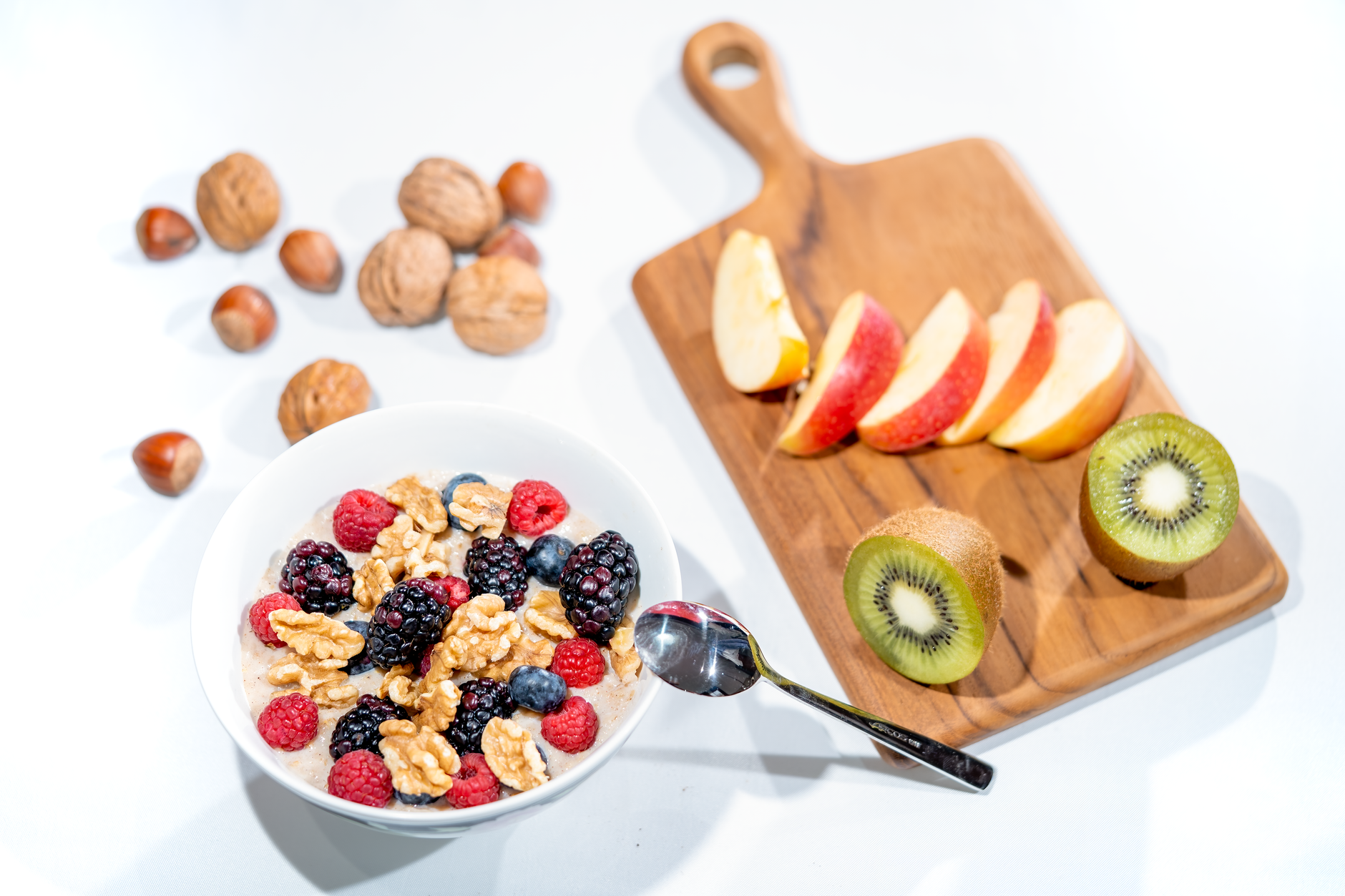
Two things do most of the work: soluble fiber (which binds cholesterol in the gut) and swapping saturated fat for unsaturated fat.
| Food | Why it helps |
|---|---|
| Oats, barley | Rich in soluble fiber (beta-glucan) |
| Beans, lentils | Soluble fiber + plant protein |
| Nuts (almonds, walnuts) | Unsaturated fats; a small daily handful |
| Olive oil | Replaces saturated fat |
| Fatty fish (salmon, sardines) | Omega-3s; good for triglycerides |
| Avocado | Monounsaturated fat + fiber |
| Fruits & vegetables | Fiber and plant compounds |
💡 Tip: Soluble fiber is the star. Aim to build meals around oats, beans, fruit, and vegetables most days.
How much can food really move the needle?
Diet isn’t a rounding error. Getting 5–10 grams of soluble fiber a day can lower LDL by around 5%, and stacking several cholesterol-lowering foods together does more. The well-studied “Portfolio diet” — combining oats and other soluble fibers, nuts, soy protein, and plant sterols (found in some fortified spreads) — has lowered LDL substantially in trials, in some cases approaching the effect of a low-dose statin. You don’t have to follow it strictly; the lesson is that combining these foods consistently beats relying on any one.
What to cut back on
- Saturated fat — fatty cuts of meat, butter, full-fat dairy, many baked goods (the AHA suggests keeping it under about 6% of calories for those lowering LDL)
- Trans fat — found in some fried and packaged foods; check for “partially hydrogenated oil”
- Ultra-processed foods — often high in both, plus refined carbs
You don’t have to be perfect. Small, steady swaps — olive oil for butter, fish or beans for fatty meat — add up over time.
It’s not just diet
Food matters, but so do these:
- Move more — regular activity can raise HDL and lower triglycerides
- Reach a healthy weight — even modest loss helps
- Quit smoking — improves HDL and artery health
- Limit alcohol — excess raises triglycerides
When food isn’t enough
Diet and lifestyle help, but some people have high cholesterol largely for genetic reasons (such as familial hypercholesterolemia) and need medication like statins to reach a safe level. That’s not a personal failure or a sign you “didn’t try hard enough” — it’s biology, and statins are among the most studied, effective medications for preventing heart attacks and strokes.
⚠️ Don’t stop or skip prescribed cholesterol medication based on diet changes alone. Talk to your doctor first — they may adjust your plan based on your numbers.
FAQ
Q. Do eggs raise cholesterol?
For most people, the cholesterol in eggs has a smaller effect on blood cholesterol than saturated and trans fats do. Most people can eat eggs in moderation; those with diabetes or very high cholesterol should follow their doctor’s advice.
Q. How fast can I lower cholesterol with diet?
Some people see changes within a few weeks to a few months of consistent eating changes. Your doctor can recheck your levels and guide the timeline.
Q. Is there a single best food for cholesterol?
No. Oats, beans, nuts, and olive oil together — as part of an overall pattern — work far better than any one “superfood.” Combining cholesterol-lowering foods is the real strategy.
Sources
- American Heart Association — Prevention and treatment of high cholesterol
- Mayo Clinic — Top 5 lifestyle changes to improve your cholesterol
⚠️ Medical disclaimer: This article is for general information only and is not a substitute for medical advice. Consult a healthcare professional before changing your diet or medication.



Leave a Reply